Category Archives: Wildlife & Plants

Why I’m Simplifying My Writing Life

Over the past few years I have found myself writing in a lot of different places.

I have three Substack publications — Conservation Chronicles, Conservation Lifestyles, and The Nature of Things. I also have a blog on this website called Field Notes, along with various social media pages where I occasionally share thoughts and observations.

None of this is bad. Each platform has its own purpose. But recently I caught myself asking a simple question:

Why am I making writing more complicated than it needs to be?

After thinking about it for a while, I realized something that probably should have been obvious all along.

The place where everything should begin is Field Notes.


Field Notes Has Been Part of My Life for a Long Time

The name Field Notes is not new to me. In fact, it goes back many years.

When I helped re-launch the Audubon Society of New York State in the early 1980s, I created a printed newsletter and called it Field Notes. The name itself was inspired by the old Audubon Field Notes journal that birders once used to report observations across North America.

The idea behind it was simple.

Field Notes was a place to record observations, ideas, and reflections about nature and conservation.

Over time, my writing moved into many other forms — articles, columns, newsletters, reports, and more recently blogs and Substack publications. But when I step back and think about it, the simplest and most natural form of writing for me has always been field notes.


What Field Notes Will Be Going Forward

From now on, most of what I write will begin right here.

Field Notes will include observations and reflections about things such as:

  • a walk at Hollyhock Hollow Sanctuary

  • birds or plants I notice in our backyard

  • ideas about conservation and stewardship

  • community issues I am thinking about

  • memories from earlier chapters of my life

  • artifacts, fossils, and other things I have collected over the years

  • projects I am working on or ideas I am exploring

In other words, whatever happens to be on my mind at the moment.

Some Field Notes will be short. Others may be longer reflections.

And many of them may simply remain Field Notes.


When a Field Note Becomes Something More

Occasionally a Field Note may grow into a larger piece.

If it relates to stories from my conservation career, it might become an article for Conservation Chronicles.

If it focuses on habitat, land stewardship, or environmental practices, it might evolve into something for Conservation Lifestyles.

If it deals with broader ideas about nature, biodiversity, or how people relate to the natural world, it may eventually become part of The Nature of Things.

But the important point is this:

Everything begins as a Field Note.


Writing as Observation

For most of my life I have kept some form of field notes.

When I was younger, they were notebooks filled with drawings of arrowheads and fossils I found in fields along the Ohio River.

Later they became notes about birds, nature centers, conservation programs, and community projects.

Writing has always been a way for me to observe, reflect, and connect ideas.

Field Notes simply continues that tradition.


The Rest Will Take Care of Itself

I’m not particularly concerned about building a large audience or managing complicated publishing systems.

If people read these notes and find them interesting or useful, that’s wonderful.

If not, that’s fine too.

For me, Field Notes is simply a place to capture thoughts about nature, community, conservation, and life as they occur.

Sometimes when you write things down, connections appear that you might not have noticed otherwise.

So this is a bit of a reset.

From now on, most of what I write will begin right here — in Field Notes.


— Ron Dodson

Snowdrops and a Roaring Creek

Earlier this week we had one of those surprising late-winter days that feels more like April than March. The temperature climbed to 73°F, which made it a perfect excuse to take a walk at Hollyhock Hollow Sanctuary.

There were still large piles of snow scattered through the woods, and most of the trails were far too muddy to walk. So instead, I followed the main road that winds through the sanctuary. Even with the snow lingering in places, the woods had that subtle feeling that winter is beginning to loosen its grip.

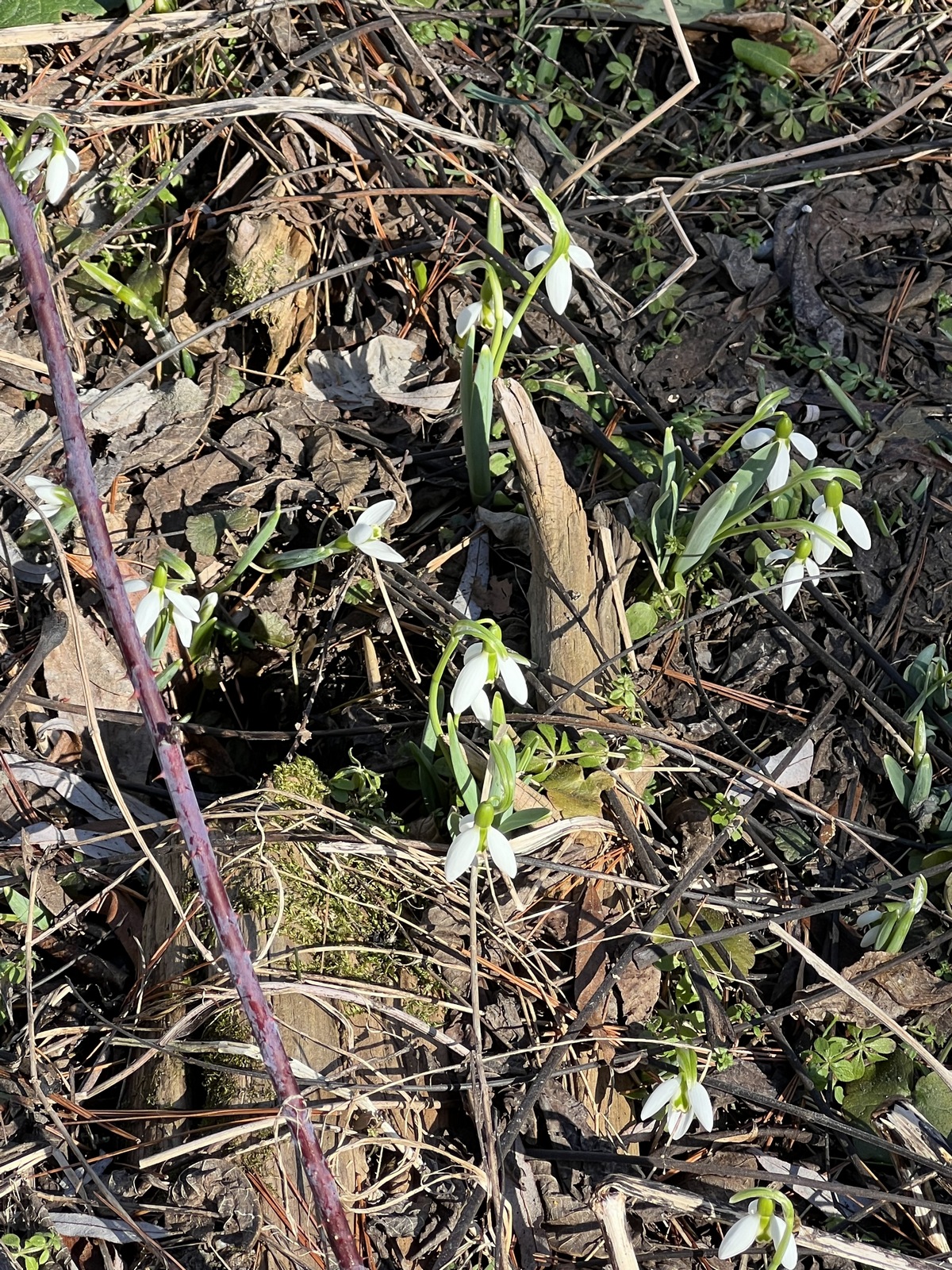
One of the things I hoped to see was whether the Snowdrops had started to appear. These small white flowers are often among the very first signs that spring is on the way.

Sure enough, tucked among the leaves and patches of melting snow, there they were.

Seeing the first Snowdrops each year always lifts my spirits a bit. They seem to carry a quiet message: winter isn’t over yet, but change has already begun.

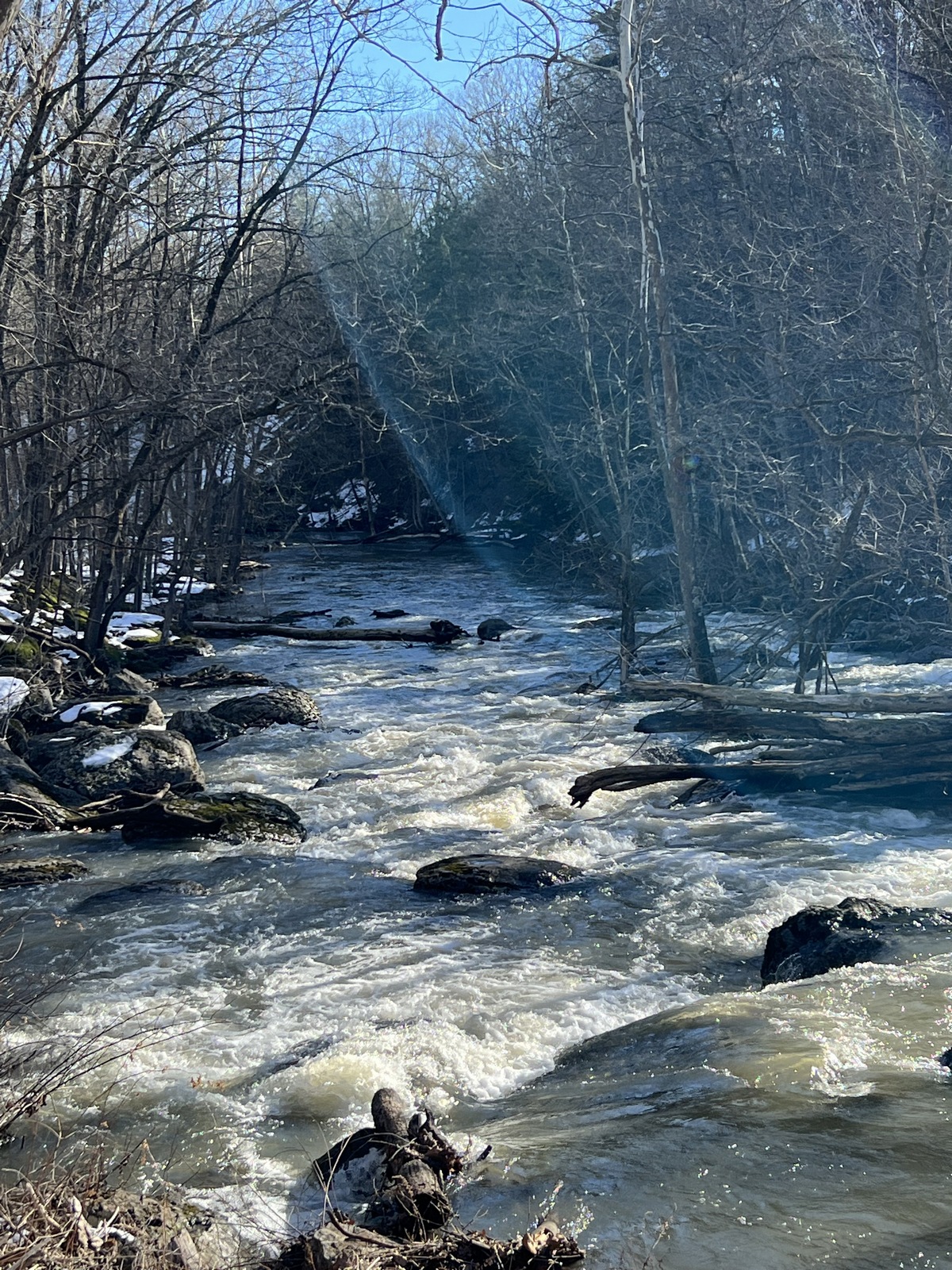
The warm temperatures had another effect as well. With the snow melting quickly, Onesquethaw Creek had turned into a bubbling, tumbling torrent. The water rushed over rocks and around fallen logs as it made its way toward the Hudson River.

Standing there watching the creek, it felt almost like the landscape itself was waking up.

The spring-like weather only lasted a couple of days. Winter has already pushed back, and the forecast is calling for cooler temperatures and even a chance of light snow.

But after seeing those Snowdrops and hearing the creek roaring with snowmelt, one thing is certain.

Spring is just around the corner.

When Environmentalism Lost the Plot

I’ve spent most of my adult life working in and around what people broadly call “environmentalism.” I care deeply about wildlife, natural landscapes, and the long-term health of the places we live. That hasn’t changed.

What has changed is my comfort level with much of what modern environmentalism has become.

And I’ll admit up front that this may sound like an afternoon rant—but it’s really an observation formed over decades.


The “fruitcake” problem

(That is a technical term.)

One of the ongoing challenges environmentalism has faced is that many people who strongly embrace “the environment” are perceived as being a little… out there. Sometimes unfairly. Sometimes not.

I’ve always loved wildlife, but I’ve never been able to fully connect with ideologies that drift into absolutism—anti-hunting at all costs, arguments that ignore basic ecological realities, or emotional positions that seem detached from how real landscapes and real communities function.

Healthy ecosystems are not managed by slogans. They’re managed by people who live in them, work in them, and understand trade-offs.


The insulation gap

Another long-standing issue is who environmentalism tends to attract.

Many people active in environmental causes are financially insulated from the daily realities most people face. When your housing, food, and income are secure, it’s much easier to advocate for solutions that increase costs or restrict livelihoods—especially when you won’t bear those costs.

That disconnect matters.

Stewardship that only works for people with money is not stewardship. It’s lifestyle branding.


The fundraising illusion

Over time, many large environmental organizations have evolved into something else entirely. They’ve become fundraising machines—well-oiled, well-branded, and very good at separating people from their money.

The pitch is familiar:

Want to save a whale? A redwood tree? A rare bird?
Send us cash and feel good about yourself.

Then you go back to living your regular life.

I’ve always struggled with that model. Because if it actually worked—if donations alone fixed ecological problems—then why is nearly every ecosystem on Earth still in decline?

At some point, that question deserves an honest answer.


You can’t outsource stewardship

Stewardship isn’t something you outsource to a nonprofit. It’s something you practice.

It’s local.
It’s personal.
It involves work.
And yes, it often involves earning a living.

People protect what supports them. Hunters, anglers, farmers, foresters, and land managers have historically been some of the strongest conservationists—not because they were told to feel guilty, but because their livelihoods depended on healthy systems.

That reality rarely fits neatly into modern environmental narratives, but ignoring it hasn’t helped ecosystems recover.


Why I’ve always focused on earning from stewardship

This is one reason I’ve always tried to link conservation and stewardship to economic activity.

Not exploitation.
Not extraction.
But use with responsibility.

If stewardship cannot support people economically, it will always remain a side project for the privileged. If it can support people—through land management, local food, habitat work, re-commerce, education, or small-scale enterprise—then it becomes part of daily life.

That’s when it scales.


A closing field note

I’m not anti-environment. I never have been.

But I’ve grown increasingly skeptical of environmentalism that:

  • Relies on guilt instead of responsibility

  • Raises money instead of changing behavior

  • Moralizes instead of engaging real people in real places

Stewardship isn’t flashy. It doesn’t make great fundraising videos. It doesn’t offer instant emotional relief.

But it works—slowly, imperfectly, and locally.

And after a lifetime in this work, that’s the direction I’ve chosen to walk.


These are simply observations from the field. Others may see things differently. That’s fine. Stewardship begins, after all, with paying attention.

Why Is That Leaf Red in July?

A Nature of Things Reflection Inspired by a Simple Walk and a Thoughtful Question

It was still hot and sticky well into the evening as Theresa and I took our usual walk down the road near our home. Most of the plants lining the ditches and field edges looked about how you’d expect them to look in mid-July—lush, green, and thriving. But every so often, we noticed something odd.

One leaf here. Another there.

Bright red. Not faded or diseased. Just red—like it had skipped ahead a few months and landed straight in autumn.

Theresa pointed to one of them and asked, “Why would just one leaf turn red this early?”

It was a fair question, and I had to admit I didn’t really know. I guessed it might be heat stress, but it seemed strange that only one leaf on the whole plant would be affected.

So, I did what any curious naturalist does when nature throws out a question mid-walk—I made a mental note, snapped a few pictures, and looked it up when we got home.


The Answer Is… Complicated, But Interesting

Turns out, red leaves in summer—especially when it’s just one or two on an otherwise green plant—are often signs of localized stress. That could mean drought stress, root injury, insect damage, or even a fungal infection affecting a small part of the plant.

But why red?

That’s due to anthocyanins—the same pigments responsible for the reds and purples of fall. When a leaf starts to shut down due to stress or damage, it may produce these pigments as a sort of protection, shielding the leaf from intense sunlight or helping manage internal chemical stress.

In other words, that red leaf might be waving a little flag that says, “Something’s not quite right here, but I’m trying to cope.”


A Bigger Lesson in a Small Leaf

As we finished our walk, I thought about how many times I’ve either not asked a question like that or let one float away unanswered. And it reminded me of something I’ve come to believe: you don’t have to have all the answers in the moment to learn from nature.

Sometimes it’s enough to notice, take a picture, wonder a little, and look it up later. That curiosity—sparked by something as small as a red leaf—is how you begin to understand a landscape more deeply.

So, next time you see something unusual—an odd color, a strange sound, a curious behavior—don’t worry if you can’t name it right away.

Let it sit with you. Bring it home. Ask someone. Search it out. And maybe even write about it.

That’s the nature of things.


🐦 Have you ever noticed one red leaf on a green plant in summer? I’d love to hear your thoughts—or see your photos—in the comments. And if you enjoy these kinds of simple observations with deeper meaning, consider subscribing my Nature of Things newsletter on Substack.

https://natureandthings.substack.com
Or join The Nature of Things group on Facebook: https://www.facebook.com/groups/thenatureofthings

Heath Dairy Farm: A Living Legacy with New Potential

By Ron Dodson
The Nature of Things

Several weeks ago, I had the pleasure of meeting with Lauren Axford, the Open Space Coordinator for the Town of Bethlehem, New York. The purpose of our meeting was to discuss a project that I believe has enormous potential—not only for our town but as a model that other communities could replicate. That project is the Heath Dairy Farm initiative, a town-led effort to preserve and reimagine one of Bethlehem’s most iconic agricultural properties.

You can learn more about the project here: https://www.historicheathfarm.com

What drew me to the Heath Dairy Project wasn’t just the scenic beauty or the historical significance of the property—although both are impressive. It was the idea that this land could serve as a foundation for a new kind of agricultural planning, one that blends conservation landscape management with local food production. It struck me that this was exactly the kind of opportunity we need more of—an intersection of environmental stewardship, local economic development, and community sustainability.

Our conversation was not only productive, it was personal. When my family and I first moved to Bethlehem, the very first home we rented was on land that had once been part of the Heath Dairy Farm. The home was owned by the daughter of the farm’s longtime owner. So, in many ways, I’ve had a direct connection to this land since the day I arrived. That connection gives added meaning to my interest in helping guide its next chapter.

During our meeting, I shared a bit about my background and my long-standing work in environmental and agricultural planning. I also gave Lauren a copy of a book I wrote several years ago about the American legacy of family farming. Our shared values made it clear to me that there is real potential for meaningful collaboration on this project.

After the meeting, Lauren followed up with a kind message and introduced me to another person who is actively involved in shaping the next steps for the Heath Dairy Project. I look forward to meeting them soon and learning more about the town’s vision.

As part of this dialogue, I also plan to introduce an initiative I’ve been developing called F.A.R.M.S., which stands for Food and Resource Management Sustainability. This framework emphasizes the importance of keeping local food systems economically viable while embedding conservation into the fabric of working landscapes. It’s a concept that I believe could align perfectly with the goals of the Heath Dairy Project.

I’m excited about what’s ahead and look forward to offering any volunteer support I can to help make this project a true example of what conservation-minded community development can look like. Projects like this remind us that the best way to honor the past is to build a future that holds true to the values that came before—land, food, family, and community.

The Big Beautiful Bill? Or a Blueprint for Undermining What Really Matters?

What if a piece of legislation, wrapped in patriotic language and promises of tax relief, was quietly dismantling the very foundations of democracy, community, and environmental stewardship?

That’s exactly what many of us believe is happening with the “One Big Beautiful Bill” (H.R. 1), passed by the House this May. It’s been called beautiful. Bold. Even historic. But let’s be honest—when you peel back the layers, this bill is a full-scale blueprint for weakening the role of local communities, eroding environmental protections, and concentrating power in ways that run counter to everything I’ve spent my life advocating for.


1. It Rolls Back Environmental Progress

This bill guts clean energy programs and pours billions into fossil fuel exploration. It undermines climate resilience and cancels out incentives that helped communities transition toward sustainable practices. Conservation entrepreneurs, like myself and many of you reading this, know that protecting the land and using it wisely isn’t just good for nature—it’s good business. This bill turns its back on that truth.


2. It Punishes the People Closest to the Land

Farm workers, local food producers, and the people who take care of our natural resources—many of them immigrants or low-income families—are hit hard. The bill cuts access to basic programs like Medicaid and SNAP, adds punitive work requirements, and punishes states that support immigrant populations, even when they’re here legally.

If we want to build thriving conservation communities, we need to support the people doing the work. This bill does the opposite.


3. It Undermines the Courts and Our Ability to Push Back

One of the most dangerous aspects of the bill is that it limits the ability of federal courts to check executive overreach. That might sound procedural, but it’s not. Our courts have been critical to defending public land, clean water, and environmental justice. Without them, the door opens wide for top-down control with little accountability.


4. It Uses Populist Language to Mask Authoritarian Goals

Eliminating taxes on tips. Creating MAGA investment accounts. These might sound like wins for working people, but they’re just shiny distractions. The real impact? Massive tax cuts for the wealthy, reduced funding for social programs, and a deeper divide between those who have and those who don’t.

Authoritarian systems often use feel-good slogans to get people cheering while they quietly consolidate power. That’s what’s happening here.


5. It Undermines Local Resilience and Conservation Entrepreneurship

The heart of my work—whether through The Conservation Company, my writing, or local food and landscape initiatives—is about helping communities build resilience. This bill strips resources from towns, ties the hands of local leaders, and puts decision-making in the hands of a few powerful voices in Washington.

It’s the opposite of what we need.


Final Thoughts: This Isn’t Just Policy—It’s a Test of Our Values

We have a choice. Do we allow this kind of top-down, extractive, and regressive legislation to shape our future? Or do we push back with real solutions rooted in conservation, education, and democratic values?

The so-called Big Beautiful Bill is not beautiful. It’s a warning.

Let’s take it seriously.

—
Ron Dodson
Founder, The Conservation Company
Publisher, The Nature of Things

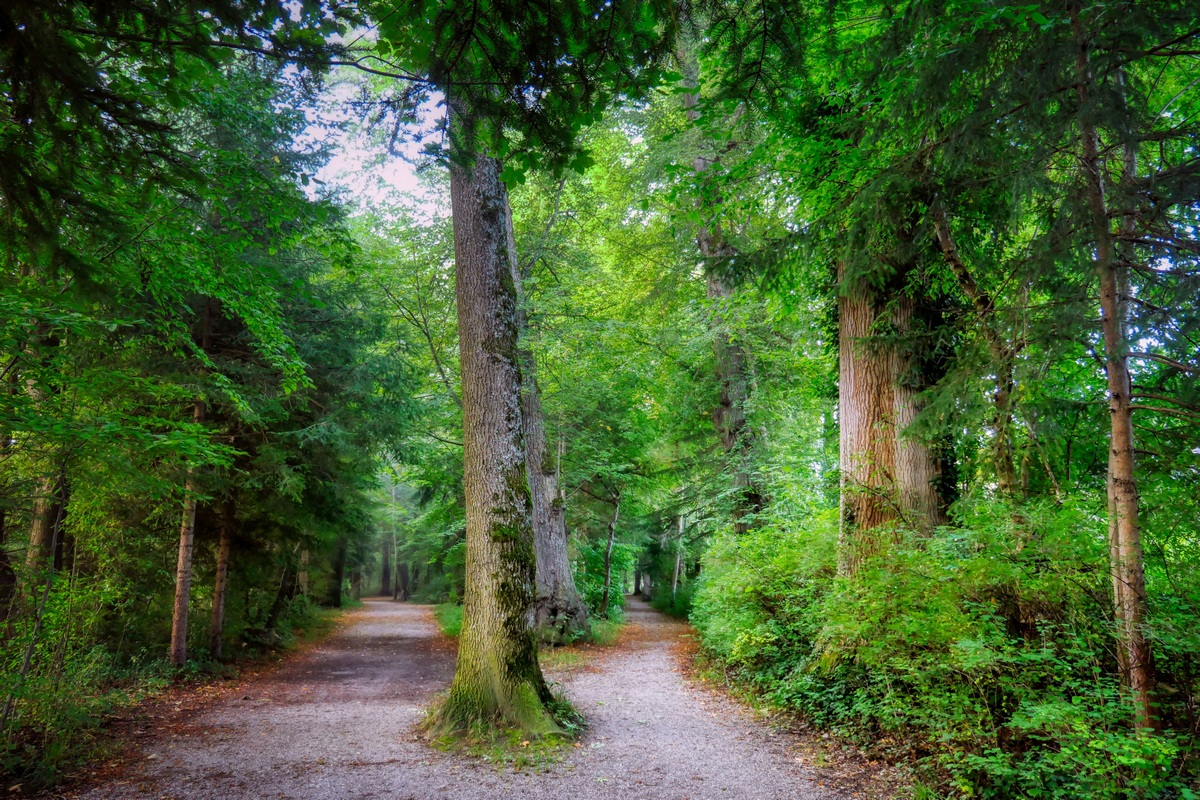
The Winding Path

Down the road from where you dwell,

The trees arch high, their branches swell.

Winter’s whispers brush the air,

Bare limbs reach skyward, sparse and bare.

The asphalt curves, a gentle bend,

A ribbon stretched to journey’s end.

The golden light of morning gleams,

Awakening quiet country dreams.

Electric wires trace the skies,

A modern thread where nature lies.

Yet harmony flows through this space,

Where time moves slow, a steady pace.

Each step you take, the earth reveals

The quiet song the season seals.

A road that’s more than just a way,

It holds the stories of the day.

Breathe deep the air, the moment stays,

A fleeting glimpse of fleeting days.

For down this road, as seasons turn,

There’s always something new to learn.

Embracing Nature’s Tapestry: The Shag Bark Hickory

In the heart of our forests, a silent guardian stands tall, its unique features weaving tales of history and ecological importance. The Shag Bark Hickory, native to North America, is a remarkable tree that deserves a closer look for its distinctive characteristics and the vital role it plays in our ecosystems. I photographed this one recently on a walk down the road where we live.

A Historical Tapestry

The Shag Bark Hickory, scientifically known as Carya ovata, has been witness to centuries of change. Indigenous communities revered it for its versatile uses, from crafting tools and weapons to utilizing its nutritious nuts as a valuable food source. Early American settlers, too, recognized its significance, incorporating its strong and flexible wood into their daily lives.

The Unique Shaggy Bark

What sets this tree apart is its striking, shaggy bark – long, vertical strips peeling away to reveal a mosaic of grays, browns, and creams. This distinctive feature not only provides the tree with protection from wildfires but also adds a touch of character to the woodland landscape.

Nutrient-Rich Bounty

Come fall, the Shag Bark Hickory generously bestows its bounty upon the forest floor in the form of large, edible nuts. These nuts, prized by both wildlife and humans, contribute to the ecological web by providing sustenance for various species, including squirrels, deer, and birds. The tree’s seeds, encased in a hard shell, ensure the continuation of its lineage.

Ecological Harmony

As a deciduous hardwood tree, the Shag Bark Hickory plays a crucial role in maintaining ecological balance. Its expansive root system prevents soil erosion, while its dense canopy offers shade to understory plants. Furthermore, the shedding of its leaves enriches the soil, fostering a nutrient cycle that sustains life in the forest ecosystem.

Conservation Considerations Despite its resilience, the Shag Bark Hickory faces challenges, including habitat loss and changing climate conditions. Conservation efforts play a vital role in ensuring the continued presence of this majestic tree, reminding us of the interconnectedness of all living beings.

In conclusion, the Shag Bark Hickory stands not just as a tree but as a living testament to the intricate dance of nature. Its historical significance, unique appearance, and ecological contributions make it a symbol of harmony in our forests. Let us celebrate and appreciate Shag Bark Hickory, ensuring that its story continues to be written for generations to come.

Discover the Delightful Little Wood Satyr

Welcome nature enthusiasts and butterfly lovers! While we try and take as many hikes as we can in local nature preserves, we often find ourselves taking a walk down the road where we live. This was the case a few days ago, and Theresa noticed a small little butterfly sitting on the road. Although we see butterflies while strolling along most nature trails, seeing one sitting in the middle of an asphalt road was worth taking a closer look at. The species that she found was a delicate little beauty. Upon closer examination, we discovered that it was a Little Wood Satyr.

The Little Wood Satyr (Megisto cymela) is a small-sized butterfly species belonging to the family Nymphalidae. With its distinct wing pattern and gentle demeanor, this butterfly is a true gem of the forest.

The Little Wood Satyr boasts a wingspan of approximately 1.5 to 2 inches (4-5 cm), making it a modest-sized butterfly. Its upper wings feature a combination of earthy hues, including shades of brown, tan, and subtle hints of orange. These patterns cleverly camouflage the butterfly among the woodland foliage, providing excellent protection against predators.

The Little Wood Satyr butterfly is primarily found in the eastern regions of North America. Its range spans from southern Canada down to the Gulf Coast states of the United States, including parts of Texas. This species thrives in a variety of habitats, including open woodlands, meadows, and edges of forests.

Like other butterflies, the Little Wood Satyr undergoes a fascinating life cycle consisting of four stages: egg, larva (caterpillar), pupa (chrysalis), and adult butterfly. Females lay their eggs on grass blades or the undersides of leaves. The caterpillars feed on grasses, sedges, and other herbaceous plants, growing in size before pupating and transforming into adult butterflies.

The Little Wood Satyr is known for its slow and graceful flight, rarely venturing far from its preferred habitat. It tends to stay close to the ground, occasionally perching on low foliage or flowers to bask in the sun.

While the Little Wood Satyr butterfly is not currently considered endangered or threatened, it does face challenges due to habitat loss and fragmentation. Conservation efforts play a crucial role in preserving the delicate balance of ecosystems and ensuring the survival of this beautiful species. By protecting its natural habitat and supporting initiatives that promote biodiversity, we can contribute to the continued existence of these delightful creatures.

The Little Wood Satyr butterfly invites us into a realm of natural wonder and beauty. Its graceful flight and subtle charm make it a delight to observe in the wild. By appreciating and learning about these incredible creatures, we deepen our connection to the natural world and inspire future generations to cherish and protect our diverse ecosystems.

So, let us embrace the spirit of exploration, lace up our hiking boots, and venture into the  forests (or walk down your road!) to witness the magical dance of the Little Wood Satyr butterfly firsthand. Happy butterfly spotting!

The Eastern Eyed Click Beetle

Greetings, nature enthusiasts! This weekend we went to an old-fashioned ice cream social hosted by the Bethlehem Historical Association. While sitting outside the museum enjoying our ice cream, I noticed a large insect flying across the landscape, landing on the back of someone’s shirt who was sitting at the next table. This caused folks to jump and hop for a bit, but when the insect finally made it to the ground, (pictured above) everyone gathered around to see what this strange-looking creature was. Being the nature enthusiast that I am, I had to wander over and investigate. What I saw was an awesome Eastern Eyed Click Beetle. But, instead of simply saying what the insect was, I demonstrated the use of the iNaturalist APP. And what do you know, it was an Eastern Eyed Click Beetle.

The Eastern Eyed Click Beetle, a captivating creature found in various regions of North America, boasts a distinctive and captivating feature—its mesmerizing “eyespots.” Resembling large, luminous eyes on its thorax, these spots evoke curiosity and intrigue.

But there’s more to this remarkable beetle than meets the eye. When threatened or disturbed, it can perform an extraordinary acrobatic feat—propelling itself into the air with an audible click sound. It’s a defense mechanism designed to startle predators and ensure its survival.

While the Eastern Eyed Click Beetle’s life cycle and behaviors remains a bit of a mystery, one thing is certain: this insect is a testament to the wonders of the natural world. So, keep your eyes peeled for this captivating creature and marvel at the secrets it holds. Nature never ceases to amaze us!

The Eastern Eyed Click Beetle (Alaus oculatus) is native to various regions of North America. Its range spans across the eastern United States, including states such as Florida, Georgia, Mississippi, and Texas, as well as parts of Canada. These fascinating beetles can be found in diverse habitats, including forests, woodlands, and grasslands. While their specific distribution may vary within their native range, their captivating presence adds to the rich biodiversity of North America.